
 EN
EN
 ar
ar bg
bg hr
hr cs
cs da
da nl
nl fi
fi fr
fr de
de el
el hi
hi it
it ko
ko no
no pl
pl pt
pt ro
ro ru
ru es
es sv
sv tl
tl iw
iw id
id lv
lv lt
lt sr
sr sk
sk sl
sl uk
uk vi
vi et
et hu
hu th
th tr
tr fa
fa ms
ms hy
hy ka
ka ur
ur bn
bn mn
mn ta
ta kk
kk uz
uz ku
ku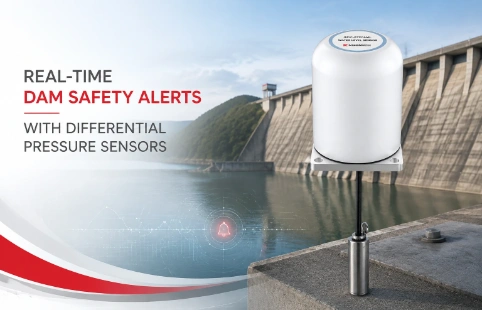
Real-Time Dam Safety Alerts with Differential Pressure Water Level Sensors
Key Takeaways An alert chain needs more than a sensor: define field in...

Resistive Soil Moisture Sensor That Works in Real Soils
A resistive soil moisture sensor reads the water content in soil by measuring the electrical resistance between two electrodes. More water means lower resistance. It is a simple and cost-effective approach that still works for projects where budgets are tight and the soil type is fairly stable. Kingmach builds these sensors for monitoring networks that need to run over multiple seasons — with housings that hold up against moisture, salt, and the usual wear from being buried in the ground. They are often used in irrigation scheduling, landslide monitoring, and construction quality control. The output is analog, so integration with data loggers and PLCs is straightforward. You will find this type of sensor in many research stations and commercial farms because it gives decent trend data without the complexity of frequency-domain sensors.
Technical Detail
Kingmach's resistive soil moisture sensor works on the principle that the electrical resistivity of soil changes with its water content. Two corrosion-resistant metal probes are inserted into the soil, and the sensor measures the voltage drop caused by the soil's resistance. The output signal can be configured as 0–2V or 4–20mA depending on your monitoring setup. The sensor body is sealed with epoxy resin, so moisture does not creep into the electronics. Probe material is usually 316 stainless steel, which resists rust in most soil conditions. The measuring range typically spans from dry soil (~200kPa suction) to saturated conditions. Response time is fast enough for real-time irrigation control. Installation is simple: you just push the probes into the soil at the depth you need. Some users bury them horizontally in a trench to get a profile reading. For longer-term sites, Kingmach can supply the sensor with a 5-meter cable and a waterproof connector as a standard option. This sensor plugs into most analog input modules. Many customers pair it with solar-powered telemetry for remote sites. Kingmach also offers calibration services if your project needs higher accuracy in a specific soil type. The company stocks standard versions, but custom probe lengths and cable lengths are common requests. For applications like slope stability monitoring or agricultural research, the resistive sensor often serves as a low-cost node in a larger network. It is not as precise as TDR sensors in saline soils, but in typical field soils the readings are repeatable and stable over time. Kingmach includes basic calibration coefficients for loam and sandy soils in the manual, and the team can help with site-specific curves if you send a few soil samples.
News
Key Takeaways An alert chain needs more than a sensor: define field in...
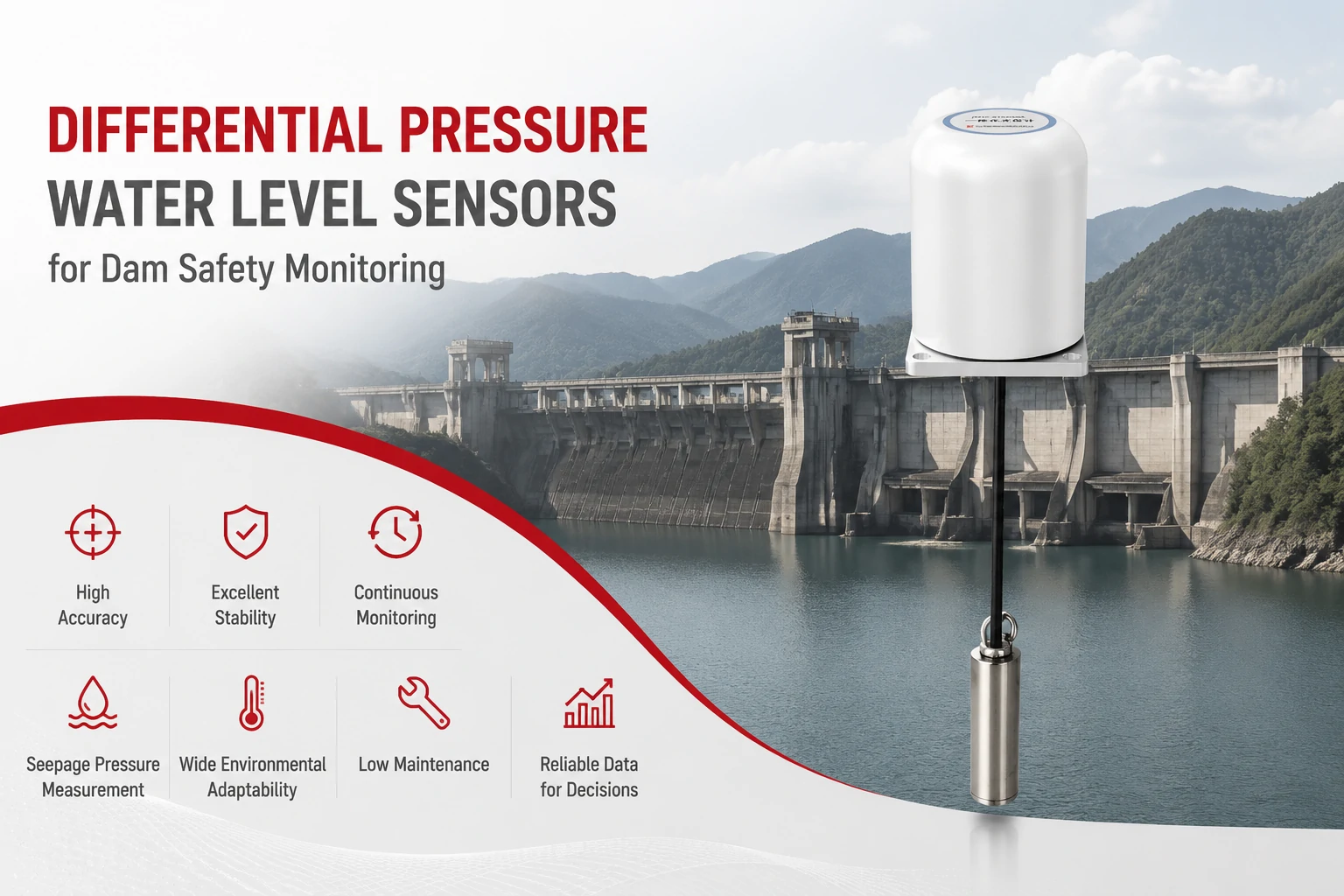
Key Takeaways The strongest fit is usually a confined, submerged, or s...
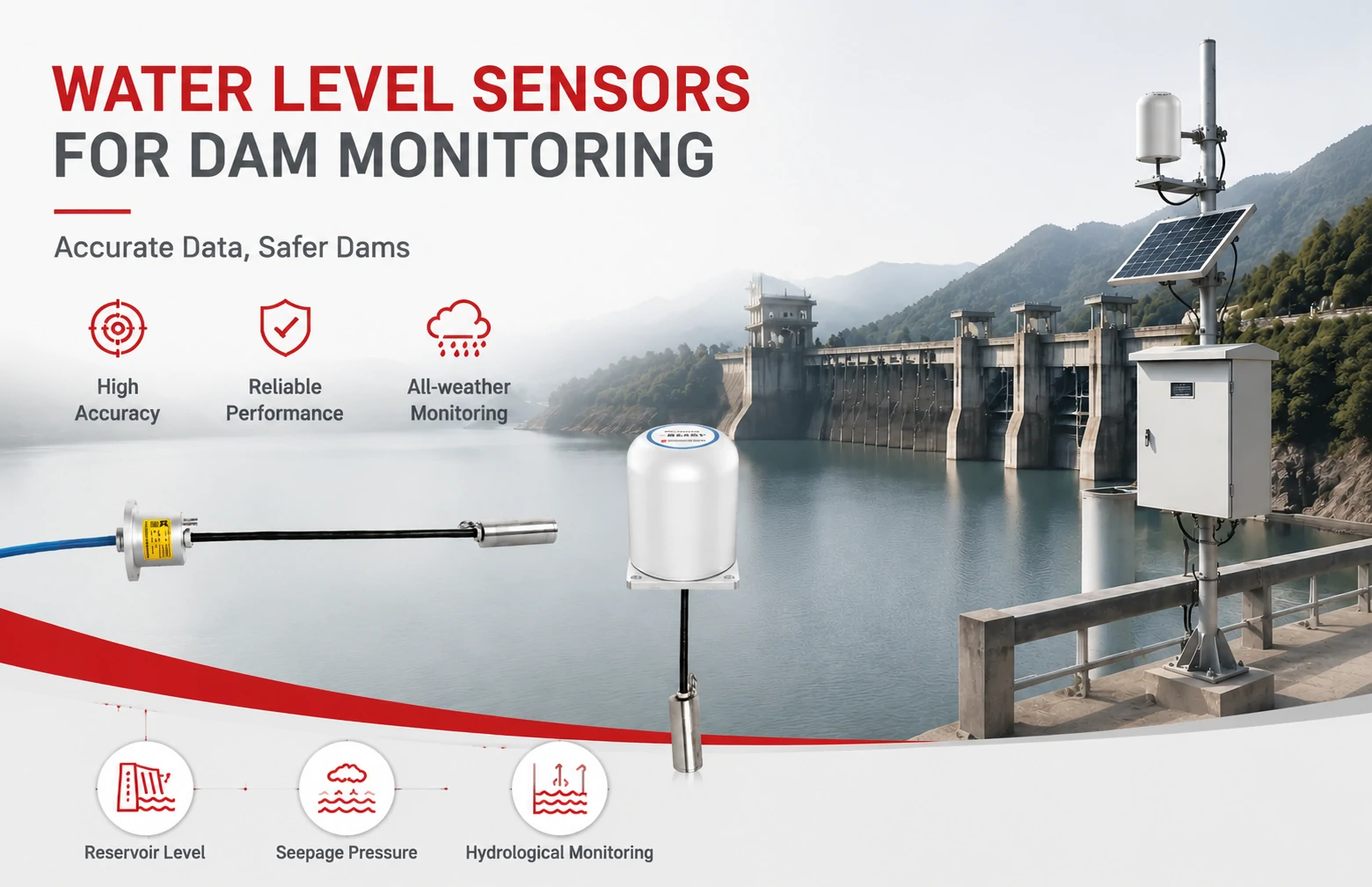
Kingmach Water Level Sensors for Dam Monitoring: A Buyer's Guide to Differential Pre...
Products
FAQ
Resistive sensors measure the electrical resistance between two electrodes, which drops as soil moisture increases. Capacitive sensors use the soil as a dielectric and are generally less affected by soil salinity and provide more stable readings over time. That said, resistive sensors are simpler and often a fraction of the cost. If your soil has moderate conductivity and you need to monitor moisture trends rather than absolute precision, resistive is a practical choice. Many of our customers in irrigation scheduling use them and find the durability acceptable for multi-year deployments.
Yes, the Kingmach resistive sensor is designed for long-term burial. The electronics are potted in epoxy, and the probes are stainless steel. We recommend using the version with a waterproof connector and UV-resistant cable. In highly acidic or saline soils, probe corrosion can occur over time, so we offer a probe replacement program — you swap out the probe tip without replacing the whole sensor.
Standard units provide an analog voltage output (0–2V or 0–5V) or a 4–20mA current loop. Both work with common data loggers, PLCs, and microcontrollers. If you need RS485 or SDI-12, we can build a custom signal conditioner as a separate module.
The sensor comes with generic calibration curves for sandy and loamy soils, which give you a starting point. If your soil has a lot of clay or organic matter, the readings will shift. We suggest taking a few soil samples, drying them in an oven, and creating your own curve. Kingmach can do this as a service if you ship us a 2kg sample, and we will send back the sensor with the corrected calibration stored in its attached electronics if you choose the digital version.
With proper installation and no extreme soil chemistry, a Kingmach resistive sensor will last 3–5 years before probe degradation may affect readings. The main failure point is corrosion on the probes, which can be replaced. Electronics are sealed and rarely fail. We also recommend checking cable connections annually, especially if rodents are present.
Share your product type, target capacity, and application requirements. Our team can review the details and recommend a practical next step.
If you are interested in our products or want to become our partner.
Please leave your contact information, our team will contact you as soon as possible.
Mail: [email protected]
Contact Us: +8613808434127
Address: No. 188 Tongzipo West Rd, Changsha, Hunan, China